
At first glance, baking cookies may seem simple. Yet, achieving the ideal texture, balanced flavor, and professional appearance requires careful attention to detail and mastery of precise techniques. Many homemade cookies fail to deliver the desired texture or taste due to small mistakes in measurement, timing, or ingredient temperature.
This article explores 6 common mistakes that directly affect cookie quality, followed by 6 professional techniques rarely shared outside pastry schools.
If you haven’t already read “The Complete Guide to Baking Different Types of Cookies,” it’s recommended to start there for foundational knowledge.
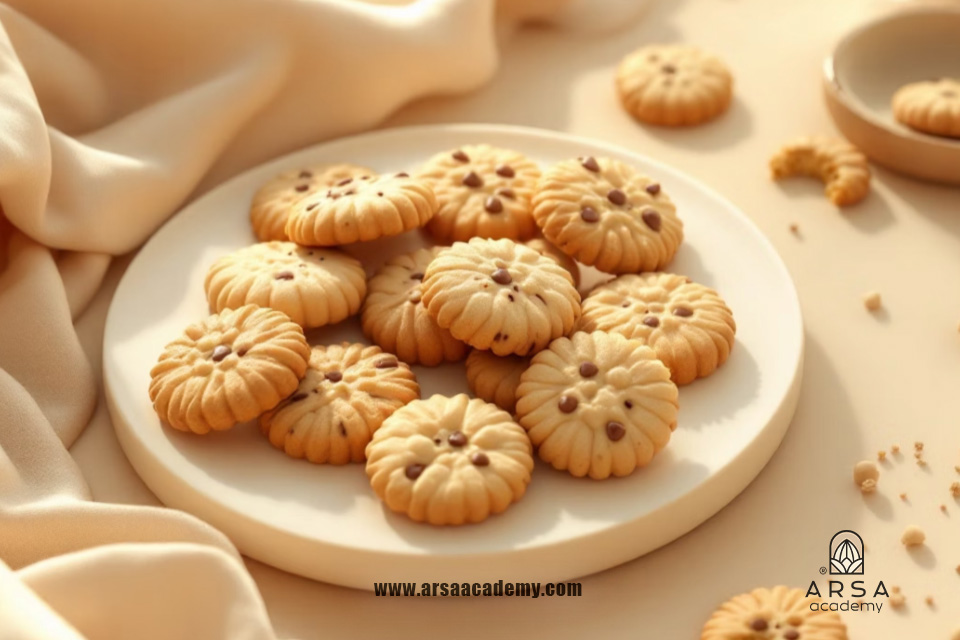
Here are six frequent errors to avoid for better texture and flavor:
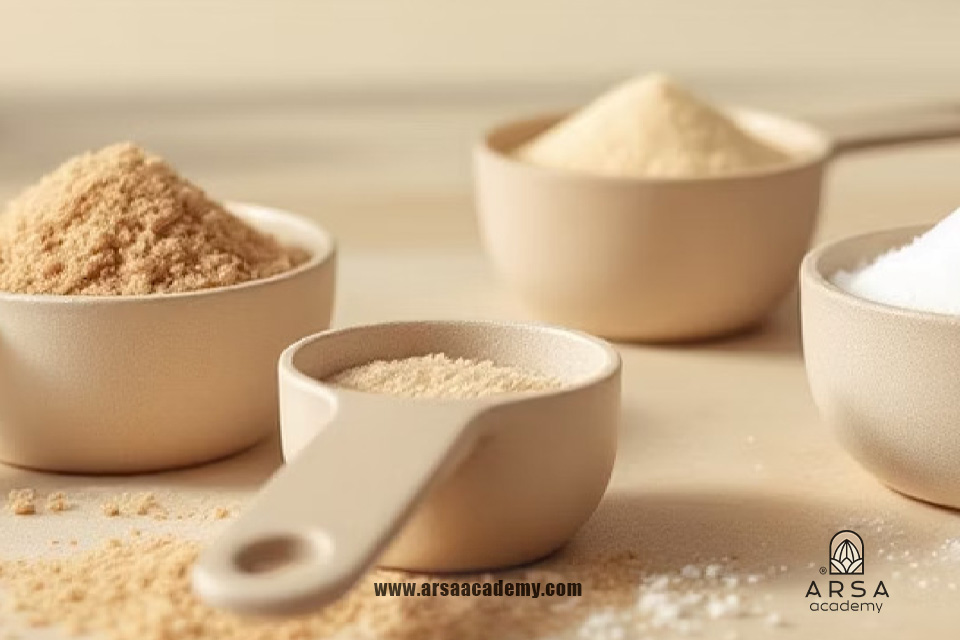
Sugar isn’t just for sweetness – it influences texture, color, and moisture. Too much brown sugar can make cookies overly soft and sticky, while excess white sugar can cause dryness and brittleness.
Pro Tip: The best result often comes from a balanced mix, e.g. 70% white + 30% brown sugar for classic cookies.
Cold butter doesn’t cream well with sugar, while melted butter ruins the dough’s structure. Similarly, eggs straight from the fridge can seize or re-harden the creamed butter.
Pro Tip: Butter should be softened at room temperature (your finger should press in easily but it shouldn’t melt). Remove eggs from the fridge 30 minutes before use.
Letting the dough rest—especially when using ingredients that absorb moisture such as oats or brown sugar—allows flavors to meld and creates a more cohesive texture.
Pro Tip: Chill dough for at least 30 minutes, and up to 24 hours for optimal flavor development.
Most home ovens vary by ±10–20°C from the displayed temperature. Baking at the wrong temperature or before the oven fully preheats causes cookies to spread too much or fail to rise properly.
Pro Tip: Preheat your oven for at least 15 minutes, and use an oven thermometer for accuracy.
Once the flour is in, the goal is just to combine the ingredients. Overmixing overdevelops gluten, leading to tough, bread-like cookies.
Pro Tip: Stop mixing as soon as no visible white streaks remain.
Many bakers wait until cookies appear fully baked in the oven—but by then they’re overdone. Cookies should come out when the edges are golden but centers still soft; they’ll finish setting as they cool.
Pro Tip: If the edges are lightly browned and the center has a slight dip, it’s the perfect time to remove them.
These techniques are often taught in advanced pastry classes and make a huge difference in texture and flavor.
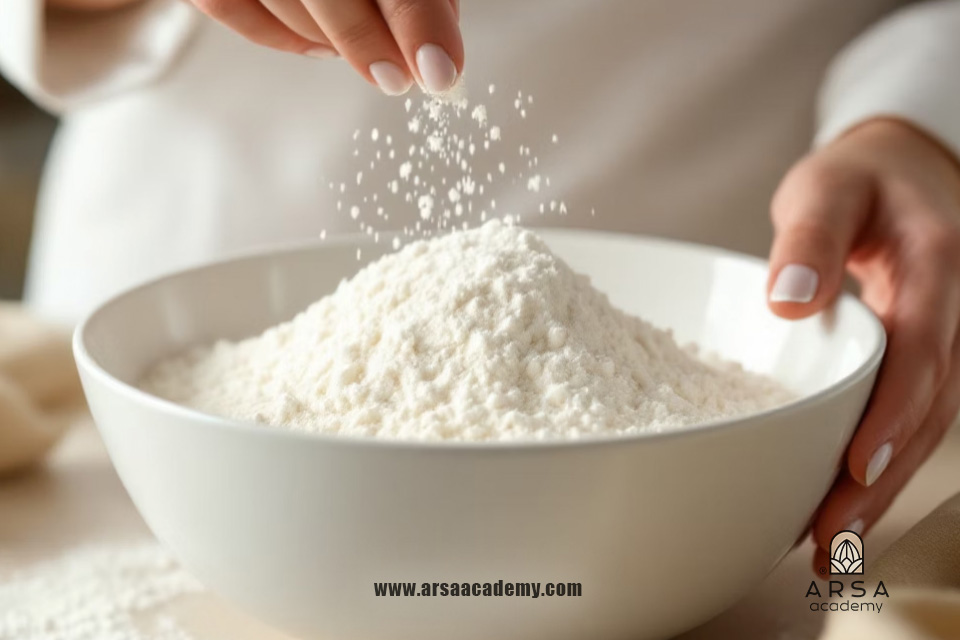
A small amount of cornstarch in flour helps prevent dryness and gives cookies a tender crumb.
Tip: Add 5–10% cornstarch relative to the weight of flour.

Raw nuts like walnuts, almonds, or hazelnuts can taste bland or even bitter. Toasting enhances their depth and texture.
Tip: Toast nuts in a 150°C (300°F) oven for 5–8 minutes, until fragrant (not burned).
Even in sweet baking, salt is essential to balance flavors and enhance aroma.
Tip: Add a pinch of fine salt to the dough, and optionally sprinkle flaky salt on top before baking for a more complex flavor.

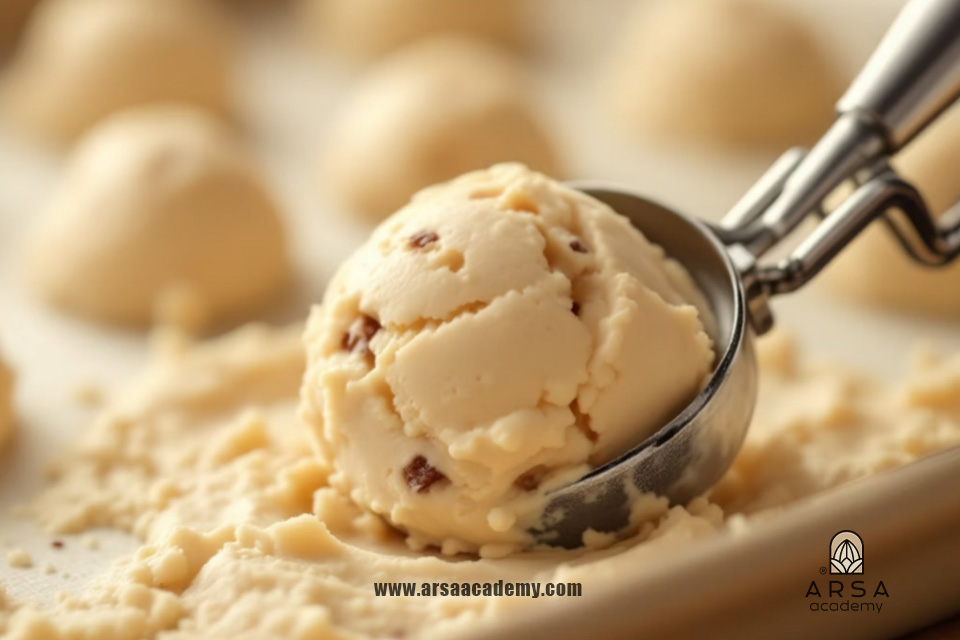
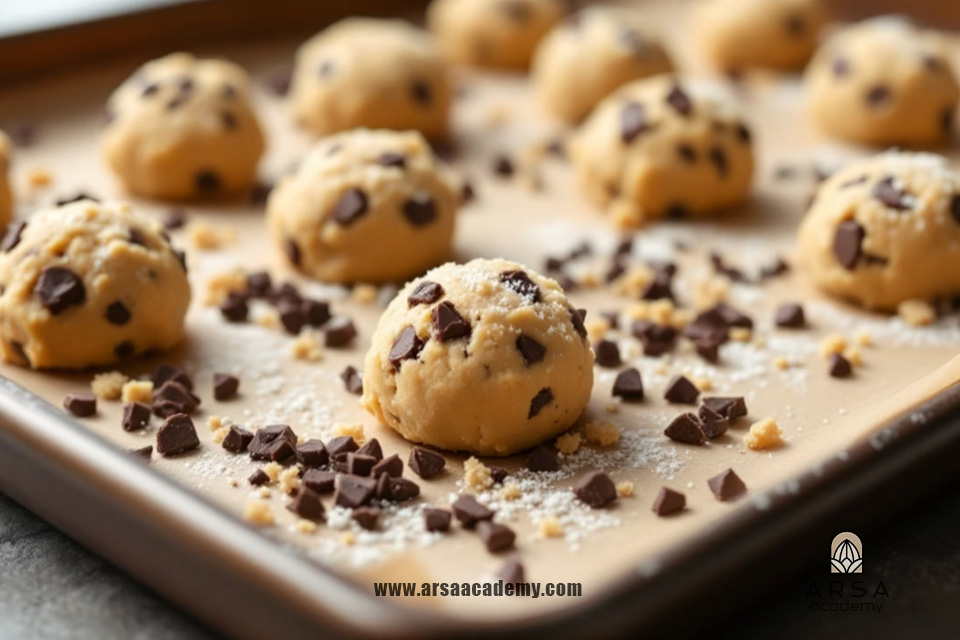
Uniform cookie size ensures even baking—especially important in professional or commercial baking.
Tip: Use an ice cream scooper—#40 for medium cookies, #20–24 for large ones.
Chilling or freezing cookie dough, especially buttery or chocolate types, intensifies flavor and controls spreading.
Tip: Freeze dough balls for 30–60 minutes or keep extra batches frozen for up to 1 month.
Professional bakers favor real dark chocolate over commercial chips, which often contain hydrogenated fats. Real chocolate melts beautifully and delivers richer flavor.
Tip: Choose chocolate with 55–70% cocoa solids for the best results.
1. Why do my cookies spread too much?
Butter may be too soft, the dough might not have chilled, or the oven wasn’t hot enough.
2. Why are cookie centers still raw?
Cookies should be removed slightly underbaked—this is normal. But if still raw after cooling, your oven temperature is too low or dough balls are too large.
3. Can cookie dough be frozen?
Yes—and it’s a professional method! Bake from frozen with 1–2 extra minutes added to baking time.
4. What’s the difference between buttery and chewy cookies?
Chewy cookies use more brown sugar and shorter bake times; crisp, buttery ones have more butter and longer baking.
5. Why didn’t my cookies crack or shine on top?
Cracks require higher oven heat and correct sugar ratio. Smooth tops can be due to overly low temperature or over-mixing.
6. Can I replace butter with oil?
Butter defines flavor and texture. Using oil alters both. If substituting, use specialized baking margarine or plant-based butter alternatives.

Mastering cookie fundamentals is only the starting point. What truly separates home bakers from professionals is attention to the small details covered here—avoiding common errors and applying refined pastry techniques.
If you’re eager to improve through structured lessons and hands-on training, consider joining the Arsa Academy In‑Person Cookie Course. It covers baking science, ingredient selection, storage methods, and specialty varieties such as Nutella, New York‑style, Mochi, and Peanut Butter cookies.
🔗 Learn more about other professional pastry courses via the academy’s training page.