
Traditional Nowruz Sweets: From History to Recipes
Nowruz, the ancient Persian New Year celebration, marks not only the beginning of a new year but also a time for family gatherings and joyful reunions. Among its many traditions, Nowruz sweets hold a special place — they are a symbol of hospitality and renewal.
In this article, we’ll explore the history and preparation of several traditional Nowruz pastries that have graced Iranian tables for centuries.
History of Nowruz Sweets
The tradition of baking and sharing sweets during Nowruz dates back hundreds of years. In ancient Persia, people made sweet treats for spring festivities and exchanged them as gifts. This custom has endured through time, and today, various kinds of traditional sweets are still prepared for Nowruz.
During the Achaemenid and Sassanid eras, special ingredients were used for Nowruz celebrations, with sweets being a key element. Back then, sweet foods were typically made with honey, flour, and nuts.
In the Safavid period, with the introduction of sugar and wider access to aromatic spices, more diverse pastry recipes emerged. Many famous Persian sweets such as Nan-e Berenji, Qottab, and Baklava trace their origins to this era and are still prepared today using traditional methods.
Beyond Iran, other countries that celebrate Nowruz — such as Afghanistan, Tajikistan, Azerbaijan, and Turkey — also feature their own festive sweets with deep cultural similarities to Persian pastries.
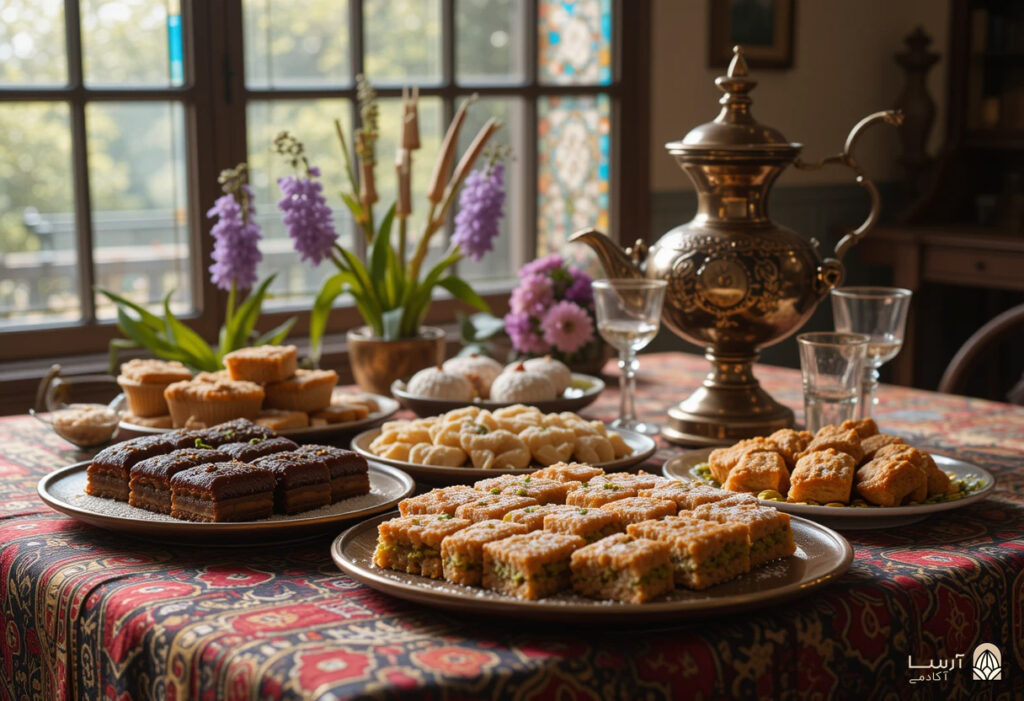
Famous Traditional Nowruz Sweets
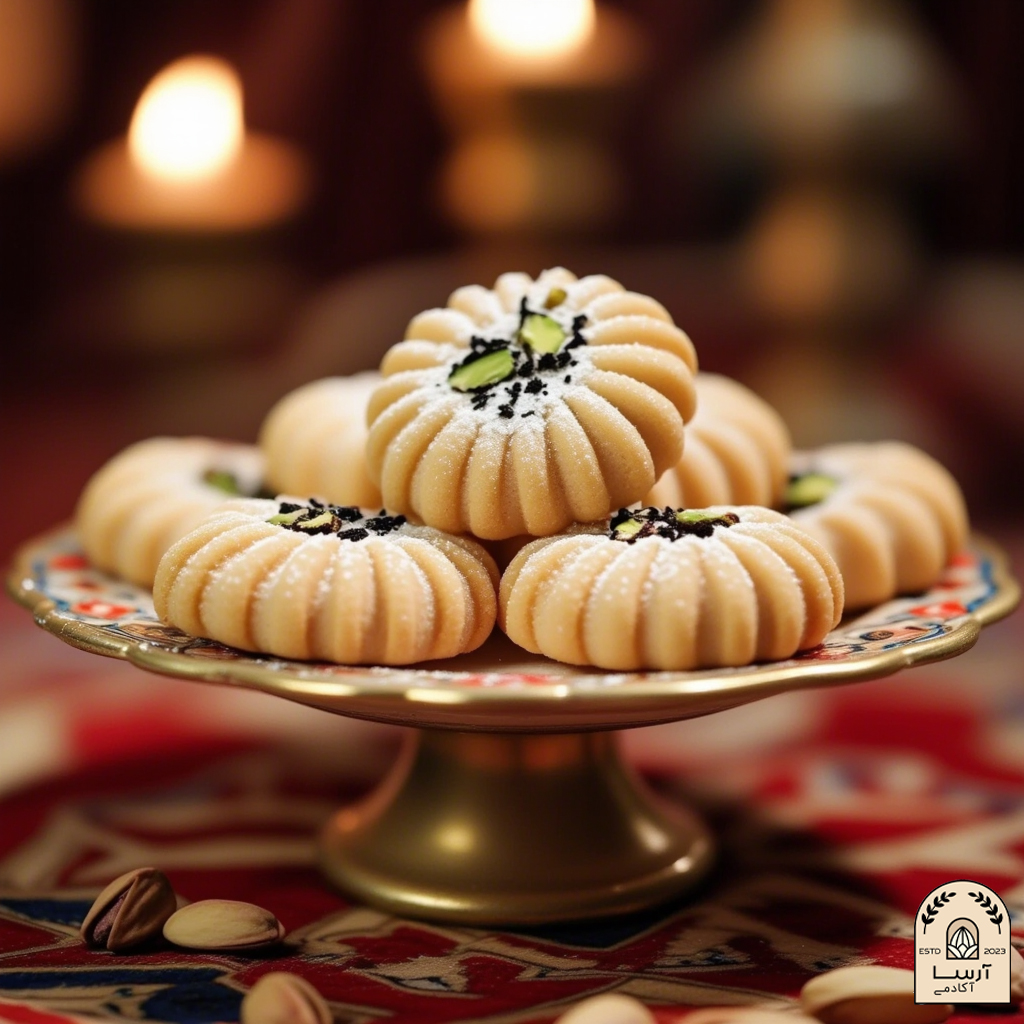
1. Nan-e Berenji (Rice Flour Cookies)
Ingredients:
- Fine rice flour – 250 g
- Powdered sugar (sifted) – 125 g
- Solid shortening or butter – 125 g
- Egg yolk – 1
- Rosewater – 25 ml (2 tbsp)
- Brewed saffron – 5 ml (1 tsp)
- Ground cardamom – 1 tsp
- Poppy seeds (for garnish) – as needed
Instructions:
- Beat the butter and powdered sugar with a whisk or mixer for 5 minutes until light and creamy.
- Add the egg yolk and beat for another 2 minutes.
- Stir in the rosewater, saffron, and cardamom.
- Gradually add the rice flour and mix with a spatula or by hand until a smooth dough forms.
- Wrap the dough in plastic wrap and refrigerate for 12 hours.
- Preheat the oven to 160°C (320°F).
- Shape the dough into 10 g balls and place them on a greased baking tray.
- Sprinkle with poppy seeds and bake for 15 minutes.
- Let them cool completely before storing in an airtight container.
2. Qottab (Walnut-Filled Pastry)
Ingredients for dough:
- All-purpose flour – 250 g
- Full-fat yogurt – 100 g
- Softened butter – 75 g
- Egg yolk – 1
- Baking powder – 5 g (1 tsp)
- Oil (for frying) – as needed
Ingredients for filling:
- Chopped walnuts – 100 g
- Powdered sugar – 75 g
- Ground cinnamon – 1 tsp
Instructions:
- Mix the butter, egg yolk, and yogurt in a bowl.
- Gradually add the flour and baking powder, kneading until a soft dough forms.
- Wrap the dough and refrigerate for 1 hour.
- Prepare the filling by mixing walnuts, powdered sugar, and cinnamon.
- Roll the dough on a floured surface to 3 mm thickness and cut into 6 cm circles.
- Place some filling in the center of each circle, fold, and seal the edges well.
- Heat oil over medium heat and fry the pastries until golden.
- Once cooled, coat them lightly in powdered sugar and store in an airtight container.
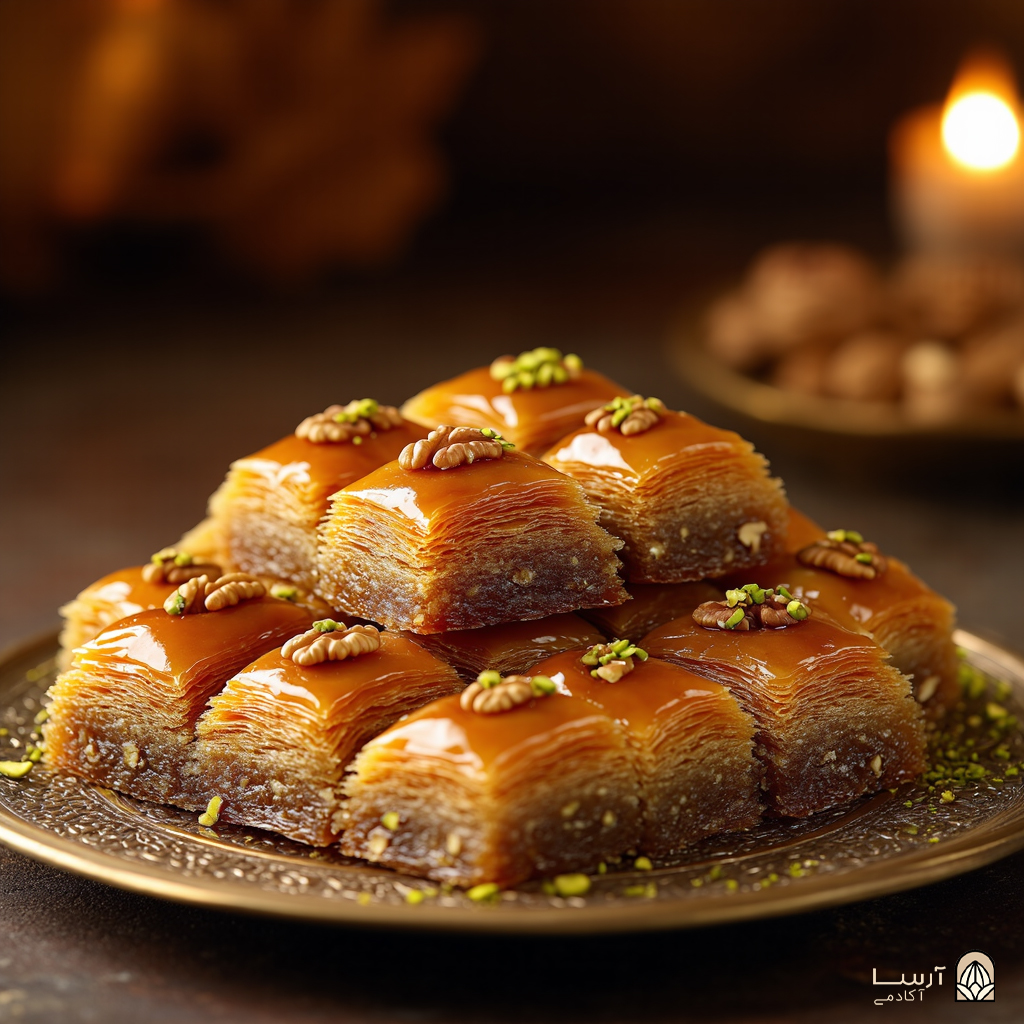
3. Baklava
Ingredients:
- Phyllo (yufka) dough sheets – 20
- Finely chopped walnuts or pistachios – 200 g
- Melted butter – 150 g
- Powdered sugar – 25 g
- Ground cinnamon – 1 tsp
For the syrup:
- Sugar – 200 g
- Water – 100 ml
- Rosewater – 2 tbsp
- Brewed saffron – 1 tsp
- Lemon juice – 1 tsp
Instructions:
- Mix the nuts with powdered sugar and cinnamon.
- Grease a baking pan and layer a few sheets of phyllo, brushing butter between each.
- Spread the nut mixture evenly, then add the remaining sheets, brushing butter between them.
- Cut into diamond or square shapes.
- Bake in a preheated oven at 180°C (350°F) for 30–35 minutes until golden.
- Meanwhile, prepare the syrup by boiling sugar, water, rosewater, saffron, and lemon juice until slightly thickened.
- Pour the warm syrup over the hot baklava and let it soak completely.
- Allow to cool before serving or storing.

Pro Tips for Perfect Nowruz Sweets
- Store sweets in airtight containers in a dry, cool place for longer freshness.
- Use high-quality ingredients for the best flavor and texture.
- Follow the baking temperature and time precisely for ideal results.
Nowruz is a wonderful opportunity to rediscover old recipes and create sweet memories with your loved ones.
Which of these traditional sweets will you bake for this Nowruz?