Guide to Choosing the Right Ingredients and Baking Tools for Cookies
Baking professional, flavorful cookies requires careful selection of ingredients and the right baking tools. The quality of the flour, the type of fat, and the sugar you use can make a significant difference in the final results. This guide introduces you to essential ingredients and baking tools so you can create cookies with professional texture, taste, and appearance — confidently and knowledgeably.
Making the right choices for each factor not only improves the quality of your cookies but also makes the baking process simpler and more reliable. If you’re looking to learn the principles of advanced cookie baking, this guide is an excellent place to start.
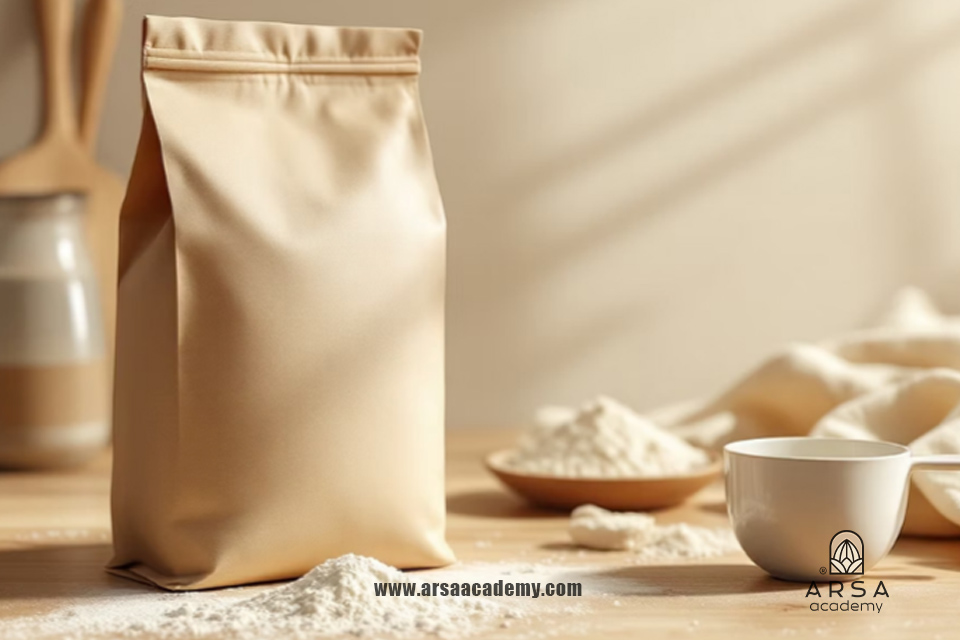
Flour is the foundation of cookie texture, and an incorrect choice can result in dry, tough, or shapeless cookies. Many assume any type of flour will work, but subtle differences in gluten levels, grinding method, and moisture content directly affect the outcome.
All-purpose flour: The most common type used for cookies. It has a moderate gluten content and works well for most recipes.
Pastry flour: Has a softer texture and lower gluten content, making it ideal for delicate and crumbly cookies like butter or sand cookies.
Whole wheat or oat flour: Often used in healthy or mixed cookie varieties, producing a denser texture.
Pro Tip: Always sift your flour before use to ensure even texture and use fresh flour stored in a cool, dry place. Choosing the right flour depending on the cookie type (soft, crisp, chewy, or buttery) significantly affects not only the texture but also the flavor.
Butter or Margarine? Choosing the Right Fat for Your Cookie Type
Fat is one of the key components in cookie baking — it affects texture, taste, color, and even appearance. The choice between butter, margarine, or other fats depends on the type of cookie and your desired outcome.
Butter
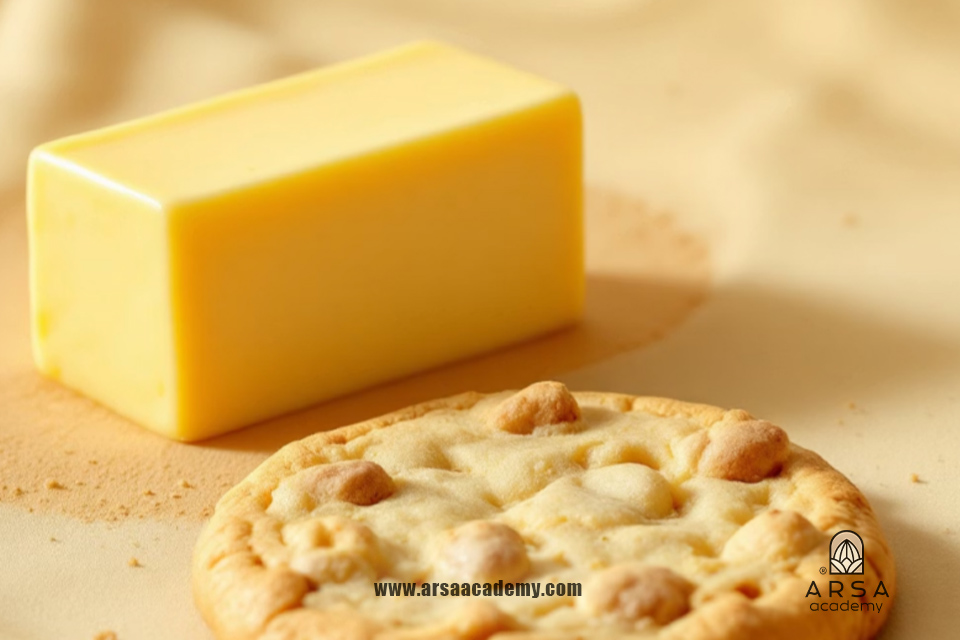
Butter is the most natural and popular fat for cookie baking. Its rich flavor and pleasant aroma elevate your cookies to a professional level.
Effect on texture: Butter is softer at room temperature compared to margarine and melts faster, causing cookies to spread more and have a tender, softer texture.
Best for: Butter cookies, New York–style cookies, and cookies that are soft or chewy.
Margarine
Margarine, with its higher water content and higher melting point, produces denser cookies that spread less during baking.
Longer shelf life: In some cases, cookies made with margarine keep longer.
Best for: Shaped cookies or those that need to hold a firm form during baking.
Pro Tip: Sometimes, combining the two yields excellent results — for instance, using 70% butter and 30% margarine can bring both great flavor and better shape stability.
Sugar: The Ingredient that Defines Flavor and Color
Sugar does much more than sweeten cookies — it determines their texture, color, moisture level, and even how much they spread in the oven. The type of sugar you choose can make your cookies crisp, soft, or chewy.
White Sugar
The most common sugar used in cookies.
Promotes faster baking, resulting in crispier, lighter-colored cookies.
Best for recipes like Nutella or Lotus cookies, where other ingredients provide the darker tone.
Brown Sugar
Contains more moisture, giving cookies a softer, chewier texture.
Light brown sugar produces a gentle flavor and softer texture.
Dark brown sugar adds deeper caramel flavor and a darker hue.
Ideal for New York–style, hazelnut, or praline cookies.
Other Sweeteners
Used in low-calorie or special diet cookies.
Require careful adjustment of moisture levels to maintain proper dough consistency.
Eggs in Cookie Recipes: How Important Are They, and When Can You Skip Them?
Eggs play multiple roles — they bind ingredients, add moisture, and contribute to the cookie’s rise and structure.
Roles of Egg Components
Yolk: Contains fat that enriches flavor and gives cookies tenderness.
White: High in protein, it strengthens and structures the dough.
Whole Egg: The standard choice in most cookie recipes — balancing moisture and structure.
Quantity and Size Considerations
Use large eggs as the standard.
Too many eggs cause excessive spreading and make cookies too moist.
Too few eggs result in dry or crumbly cookies.
💡 Pro Tip: For richer, chewier cookies, add an extra yolk (without the white).
Flavorings: From Real Vanilla to Premium Cocoa Powder
Flavoring agents give cookies their personality — transforming a basic recipe into something memorable. The quality of these ingredients distinguishes professional results from ordinary home baking.
Vanilla
Pure vanilla extract: The professional’s choice, offering a warm, balanced depth of flavor.
Vanilla powder or seeds: Adds elegance to buttery or classic vanilla cookies, giving visible black specks and a strong aroma.
Cocoa Powder
Natural cocoa: Lighter brown color, mild flavor — perfect for lighter or combined doughs.
Dutch-processed (dark) cocoa: Rich color, deeper taste, and lower acidity — great for intense chocolate cookies like dark chocolate & barberry.
Always check the fat percentage and purity level of your cocoa.
Other Flavor Enhancers
Spices like cinnamon, cardamom, and ginger for spiced cookies.
Extracts such as almond, orange, or lemon for variety.
Fruit purees or natural jams for special recipes.
💡 Pro Tip: Combine flavorings with fat (like butter) first — this helps evenly distribute aroma throughout the dough.
6. Nuts, Chocolate, and Add-ins: How to Choose and When to Add Them
Add-ins such as nuts, chocolate, and dried fruits enhance appearance, flavor, and nutritional value. However, improper selection or timing can ruin the dough’s texture or create uneven distribution.
Nuts (Walnuts, Hazelnuts, Almonds, etc.)
Freshness matters: Nuts can go rancid quickly. Always use fresh, raw ones.
Proper chopping: Avoid pieces that are too large (can break cookies) or too fine (lose texture).
Recommended for: Walnut, hazelnut-praline, and almond cookies.
Chocolate
Forms:
Chips hold their shape.
Chunks melt into gooey pockets.
Drops create a more professional appearance.
Dark vs. milk: Use dark chocolate to balance sweetness in sugary cookies like Lotus.
Dried Fruits and Specialty Add-ins
Barberries or raisins for a tart, colorful touch.
Coat in flour before mixing to prevent sinking in the dough.
When to Add Them
Add after the wet and dry ingredients are fully combined, folding gently with a spatula or wooden spoon to preserve the dough’s texture.
For decorative toppings, add after shaping the cookies.
💡 Pro Tip: Avoid overloading the dough — too many add-ins cause uneven baking and make shaping difficult.
Tools You Need for Professional Cookie Baking
Achieving professional results requires professional tools. Although it’s entirely possible to bake cookies with simple kitchen equipment, using the right tools helps control texture, size, and baking quality more precisely. In professional pastry classes, these details make all the difference.
Basic Tools
Mixing bowls: Separate ones for dry and wet ingredients.
Digital scale: Ensures precise measurements — spoons and cups are not always accurate.
Hand or stand mixer: Depending on the cookie type and dough consistency.
Silicone spatula: Ideal for gentle mixing without damaging the dough.
Cookie-Specific Tools
Cookie scoop: Helps portion dough evenly and prevents excessive spreading in the oven.
Nonstick baking tray or parchment paper: Ensures proper baking and easy removal.
Cooling rack: Keeps cookies from becoming soggy or steaming underneath after baking.
Cookie cutters (metal or plastic): For shaped cookies with neat edges.
Silicone baking mat (Silpat): Professional alternative to parchment paper, reusable and provides better heat distribution.
Temperature and Oven Control
Oven thermometer: The actual temperature often differs from the set temperature — which can cause underbaking or burning.
Convection oven (with fan): Ensures even heat circulation and uniform baking.
💡 Pro Tip: One of the main distinctions between home-baked cookies and those produced in pastry academies is precision — both in tools and temperature control.
Conclusion: Mastering the Art of Cookie Baking
Cookie baking might look simple, but creating truly professional cookies — with perfect texture, balanced flavor, and an irresistible appearance — demands attention to detail.
In this guide, we explored essential ingredients, practical techniques, common mistakes, and professional baking tools — insights often taught only in specialized pastry courses.
If you’re eager to advance beyond home baking and learn cookie making in a structured, scientific, and professional way, our academy offers the “Professional Cookie Masterclass” designed specifically for that purpose.
In this course, you will learn:
Over 10 types of popular, high-end cookies (from Nutella to Mochi).
Golden techniques for dough preparation, texture mastery, baking, storage, and presentation.
Work with advanced tools and premium ingredients.
Insider secrets not shared in common tutorials.
🔗For detailed information and registration, visit the course page
You can also explore other professional pastry courses offered by Arsa Academy to further enhance your confectionery skills.